FREE sourcing support and up to 3% coordination support for qualified business buyers. Eligibility applies to qualified business buyers and is confirmed after we review your product, quantity, destination, and sourcing requirements.

Material applications

FiberHaven Procurement: turn yarn and fiber projects into purchase fields

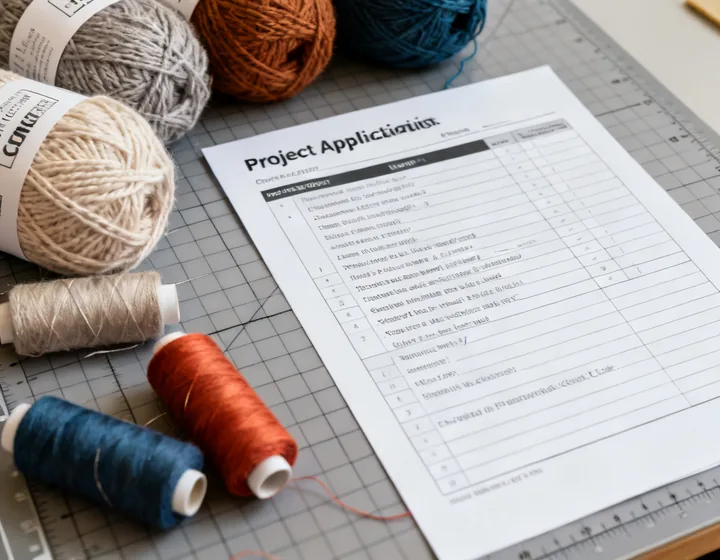
Apparel knitting and sewing materials laid out with an application checklist

Application requirements

Describe end use and exposure conditions

Write the finished product, contact conditions and expected service environment before asking mills for count. Next-to-skin jersey, suiting warp, embroidery thread and industrial sewing thread do not share one twist or luster target. Note washing, dry cleaning, industrial laundry, UV or abrasion if those conditions are known. If the program will be knitted, record gauge and whether the yarn must run on specific machines. If it will be woven, record whether the yarn is intended for warp or weft. Site constraints such as bonded warehouse receiving, carton limits or humidity control should be listed as logistics facts, not as mill marketing claims. Unknown exposures stay unknown; they should not be filled with a generic apparel story.

Identify the test method and sample condition

When buyers ask for count, twist, tensile strength, colorfastness, pilling or shrinkage, name the method, edition, specimen, conditioning and which sample stage the test uses. A public textile method listing is a question set, not a product result. Lab dips, strike-offs and production cones are different conditions; mixing them hides shade and moisture differences. If a third-party laboratory is required, say so before award. FiberHaven Procurement can request mill or lab documents bound to the quoted article; it does not issue those documents. A certificate without article, site and date is an open item.

Match quantity, finish and usable width to the application

Yarn quantity is usually kilograms or pounds per shade; fabric expansions use yards, meters or rolls and must include usable width. State quantity per color and total, package form, and whether greige, dyed or finished material is requested. Finish, wax, oil, heat-set or mercerizing steps change sewing and knitting behavior; they are not optional footnotes. Delivery stages (sample, bulk, replenishment) and US destination should sit next to the quantity so freight and duties can be quoted on the same basis. If the project later needs woven or knitted apparel fabric, carry GSM and usable width as extra fields rather than assuming yarn count already answers cloth yield. Stock programs can shorten sampling when the listed construction already fits; custom development can match warp, weft, gauge and finish but needs explicit minimums and written approvals. A lower unit price is comparable only when usable width, GSM, yield, testing, freight and approval stages use the same delivered scope.

Send the project application with the yarn brief

Share end use, documents, delivery stages and site constraints together with count and quantity. We will not invent a mill lead time.

Preference is a buyer cost and service trade-off, not a verified mill rating.

By sending this brief you agree to the Privacy Policy. FiberHaven Procurement is an independent sourcing partner, not a mill catalog.